Guest Post for Longmont Humane Society by Cat Topia
Most of the time, we think of our furry friends as low-maintenance, self-entertaining animals. While many cats may appear calm or independent, that doesn’t mean their needs are fully being met. Cats are naturally active and instinct-driven; they’re wired to climb, explore, chase, and observe their surroundings. When their environment doesn’t support these behaviors, the effects aren’t always obvious right away. A lack of stimulation can quietly impact both their physical health and emotional well-being over time. What may look like a “lazy” or “low-energy” cat can often be a cat that simply isn’t being given the opportunity to engage with their environment. Providing enrichment isn’t just a bonus, it’s an essential part of helping your cat live a healthy, balanced, and fulfilling life.
What Does an Understimulating Environment Look Like?
An understimulating environment isn’t necessarily an unsafe or uncaring one, it simply means your cat doesn’t have enough opportunities to engage their natural instincts throughout the day. In many homes, this can look like long stretches with little to no interactive play, limited access to spaces for climbing or exploring, and few changes in their daily routine. While your cat may have food, water, and a comfortable place to rest, those basics alone don’t provide the mental and physical stimulation they need.
It’s also important to understand the difference between a safe environment and an enriching one. A safe home protects your cat from harm, but an enriching environment actively encourages movement, curiosity, and engagement. Without things like vertical space, interactive play, or new experiences, even a loving home can feel predictable and unstimulating from a cat’s perspective. Recognizing this is the first step in creating a space where your cat can truly thrive.
The Impact of Boredom on Your Cat’s Health and Behavior
While your cat at home may be fluffy and cute, they still share the same DNA as their predator ancestors. In the wild, cats hide their pain and emotions, as showing weakness can make them vulnerable. This translates to our homes as well, making it harder for owners to recognize whether a cat is in pain or simply bored. Most of the time, cats will give us hints or clues through their behavior, but these are often misunderstood and labeled as a “bad” or misbehaving cat. Some cats may become more vocal or active, while others may withdraw or appear unusually quiet. Over time, a lack of stimulation can affect your cat’s behavior, emotional well-being, and even physical health in ways that are often overlooked.
Some common signs and effects of boredom in cats include:
Excessive meowing or attention-seeking behaviors: Your cat may vocalize more often or demand attention as a way to compensate for a lack of stimulation and interaction.
Destructive habits: Scratching furniture, knocking items over, or getting into things they shouldn’t can be your cat’s way of creating their own stimulation.
Aggression toward people or other pets: Frustration and unmet needs can sometimes show up as irritability or sudden aggressive behavior.
Increased hiding or withdrawal: Some cats respond to boredom by disengaging, spending more time alone, or avoiding interaction altogether.
Lack of curiosity or engagement: A bored cat may stop exploring, playing, or showing interest in their surroundings.
Weight gain due to inactivity: Without regular movement and play, cats can become more sedentary, increasing the risk of unhealthy weight gain.
Reduced muscle tone and overall fitness: Limited physical activity can lead to weaker muscles and decreased overall physical condition over time.
While these are all common signs of a bored cat due to an understimulating environment, they can also be indicators of an underlying disease or illness. Because cats are so good at hiding discomfort, it’s important not to assume these behaviors are only related to boredom. If your cat is showing any of these signs, your first step should be to consult with your veterinarian to rule out any potential health concerns. Once any medical issues have been addressed, you can then begin to look at your cat’s environment and determine if a lack of stimulation may be contributing to their behavior.
Why Cats Need a Stimulating Environment
A stimulating environment isn’t just something that’s “nice to have” for your cat, it’s essential to their overall well-being. Cats are instinct-driven animals, and their need to climb, explore, observe, and hunt is deeply rooted in who they are. When those instincts don’t have an outlet, it doesn’t just lead to boredom, it can impact how they feel, behave, and experience their daily life.
Without enough mental and physical stimulation, cats can begin to disengage from their environment. What may look like a calm or low-energy cat can sometimes be a cat that has simply learned there’s nothing to do. Over time, this can affect their confidence, reduce their curiosity, and contribute to both emotional stress and physical decline. Their world becomes smaller, more predictable, and less fulfilling.
Providing enrichment isn’t about giving your cat more space to pass time, it’s about giving them the opportunity to express who they are. A stimulating environment supports movement, encourages natural behaviors, and keeps their mind engaged. It helps transform their life from one of simply existing to one where they are active, curious, and fulfilled.
Simple Ways to Create a More Stimulating Environment at Home
Creating a more stimulating environment for your cat doesn’t have to be complicated or overwhelming. Small, intentional changes can make a big difference in how your cat experiences their day. The goal is to give your cat opportunities to move, explore, and engage with their surroundings in ways that feel natural to them.
Some simple ways to support a more enriching environment include:
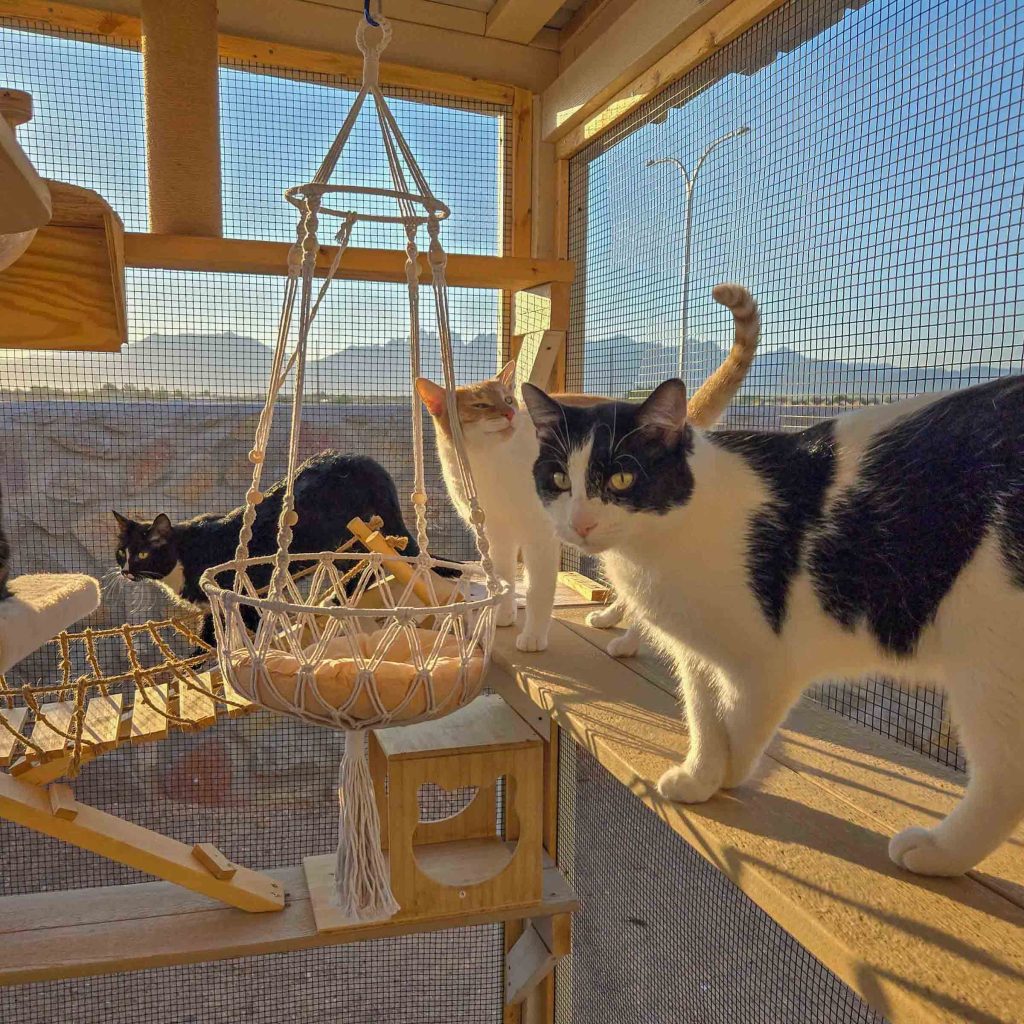
Design for movement and exploration: Create pathways your cat can navigate, whether it’s through furniture, shelves, or designated climbing areas. Giving your cat the ability to move vertically and explore different levels helps mimic how they would naturally interact with their environment.
Support natural behaviors like climbing and observing: Cats feel safest and most engaged when they have access to height and vantage points. Cat trees, shelves, and window perches allow them to climb, rest, and observe their surroundings, which is a key part of how they mentally engage with the world.
Create opportunities for hunting and play: Rather than occasional play, aim to incorporate moments where your cat can chase, stalk, and “capture.” Interactive toys and short daily play sessions help fulfill this instinct and provide both mental and physical stimulation.
Keep the environment dynamic and engaging: A static environment can quickly become unstimulating. Rotating toys, introducing new objects, or changing small elements in their space can help maintain curiosity and prevent boredom.
Offer safe, enclosed outdoor experiences when possible: Fresh air, natural light, and outdoor sights and sounds can be incredibly enriching for cats. Safe, enclosed setups, such as a catio or other outdoor cat enclosures, whether large or small, can give your cat access to these natural stimuli while keeping them protected.
Helping Your Cat Thrive, Not Just Get By
At the end of the day, the goal isn’t just to prevent unwanted behaviors, it’s to improve your cat’s overall quality of life. When a cat’s environment supports their natural instincts, you’re not only reducing the risk of boredom and related issues, you’re helping them feel more confident, engaged, and fulfilled in their daily life.
The good news is that creating a more enriching environment doesn’t require a complete overhaul. Small, thoughtful changes, like adding vertical space, incorporating regular play, or introducing new experiences, can make a meaningful difference over time. These adjustments help turn your home into a space where your cat can move, explore, and express their natural behaviors.
By recognizing your cat’s needs and making intentional changes to support them, you’re doing more than just meeting the basics, you’re giving your cat the opportunity to truly thrive.